The world of Expedition 33
The world of Clair Obscur: Expedition 33 (spoiler-free)
Once a year, the Paintress wakes, paints a number, and everyone of that age is erased. Here is what you need to know about the world of Expedition 33, from Lumière to the Continent, without giving the story away.
Published · 5 min read
The game in brief
Clair Obscur: Expedition 33 is the first game from Sandfall Interactive, a French studio based in Montpellier, and it is published by Kepler Interactive. It came out on 24 April 2025 on PC, PlayStation 5 and Xbox Series X|S. It is a turn-based role-playing game, but every enemy attack plays out in real time: you dodge, parry or jump at the right moment, and you can switch to free aim to shoot a weak point or a flying enemy.
It swept The Game Awards 2025. Named Game of the Year, it took home nine awards from thirteen nominations, a record for the ceremony, including Best Narrative, Best Art Direction, Best RPG, Best Game Direction, Best Independent Game and Best Debut Indie Game. Composer Lorien Testard won Best Score and Music, and Jennifer English, the English voice of Maelle, won Best Performance.
The Paintress and the Gommage
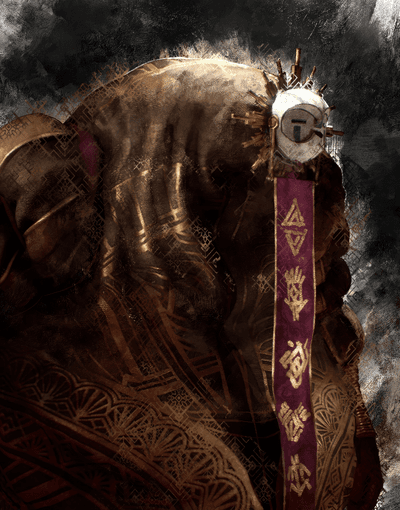
Everything starts with a ritual. Once a year, the Paintress wakes and paints a number on her Monolith. Everyone of that age then fades away in a swirl of petals: this is the Gommage, from the French verb gommer, to rub something out with an eraser. The following year, she paints a number one lower.
That countdown shapes the whole of society. Everyone knows the age at which their turn will come, and each Gommage takes one more generation. The game opens in Lumière on the day of one of these ceremonies, which sets the tone from the very first minutes.
Lumière, the last city
Lumière is the last city of humankind. It stands on an island, in a world shattered 67 years earlier by a cataclysm known as the Fracture. Whole chunks of buildings still float above its streets, and the sea separates the city from the rest of the land: the Continent.
The city borrows heavily from Belle Époque Paris: ornate façades, an opera house, formal gardens. You walk through the Central Plaza, the Opera House, Lumière's Gardens and the Harbour, and even along a walkway clinging to a crooked tower. All these names come from the game's official localisation, and you will find the others in our guide to the areas of the Continent.
The expeditions
Every year, Lumière sends an expedition to the Continent with a single mission: destroy the Paintress before she paints the next number. None has succeeded, since the Gommage still happens. Expedition 33 is the latest one, and it is the one you follow.
Earlier expeditions left traces behind. The Expedition Flags they planted act as rest points, where you heal, recharge your items, learn new skills and spend attribute points. Along the way you also pick up journals written by those who came before, each describing their own crossing.
The landing itself goes badly: barely ashore, the expedition is attacked by a mysterious old man. What happens next is best discovered controller in hand.
The Continent and its inhabitants
Nevrons
Nevrons are the hostile creatures of the Continent and the bulk of your fights. They come in very different shapes: spear-wielders, dancers, armoured knights, flying beasts. Some also exist as chromatic variants, tougher versions fought as optional bosses. One fun detail: unlike every other Nevron, Petanks run away as soon as they spot you.
Gestrals
The Gestrals are a people apart who live for fighting and challenges. Their village is led by their chief, Golgra, and they stage bouts in arenas, including a clandestine one and another that is well hidden. You will also meet Gestral merchants who roam the world and trade rare items for Chroma. Monoco, one of your party members, is a Gestral himself.
Esquie
Esquie is a legendary creature, huge and kind-hearted, whom the expedition has to recruit to cross the sea. There is a catch: without his rock, Florrie, he cannot swim. Once he has joined you, he becomes your mount on the world map, and you can call him at any time.
Axons
The Axons are beings of an entirely different scale. To forge a weapon able to pierce the barrier that protects the Monolith, the expedition has to defeat two of them, each on its own island.
Chroma, energy and currency
Chroma is everywhere. It is the energy that runs through the world, and it is also the currency merchants ask for. It drives your progress too: the Curator upgrades your weapons with Chroma Catalysts, and a Chroma Elixir fully heals the whole party when a fight has gone wrong. Pictos, for their part, raise your characters' stats and teach them passive effects called Luminas.
A painted world with a French accent
The game wears its French roots openly, even in English. Plenty of words stay French: Gommage, Lumière, Gestral, Nevron (from Névron). Enemies such as the Eveque, the Chevaliere or the Demineur even keep their original names, simply without the accents. Weapons have portmanteau names like Lanceram or Glaisum, which often blend the name of an enemy with an ending specific to each character.
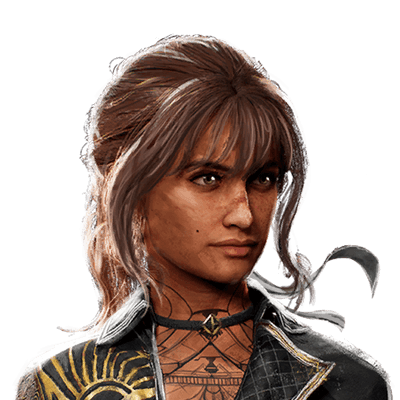
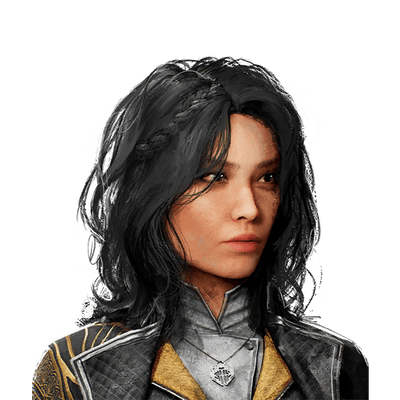
The art direction draws on painting, which is fitting for a story built around a painter. Lorien Testard's soundtrack, which won at The Game Awards, carries it all. In English, the characters are voiced by Charlie Cox (Gustave), Jennifer English (Maelle), Ben Starr (Verso) and Andy Serkis (Renoir), among others.
How Clair Obscurdle uses it
Clair Obscurdle turns this world into daily puzzles. Classic mode asks you to find a character from six clues: category, role, gender, affiliation, combat style and the zone where they first appear. Complete mode adds the mobs, for 123 characters in total. Quote mode draws on 76 lines taken from the game's localisation files, Weapons mode on 107 weapons and Enemy mode on 149 enemies.
Even the number shown each day comes from the game: it counts the days since its release on 24 April 2025. To go further, read about the playable characters and their mechanics, the guide to the areas or the English-French glossary.